









Introduction Reality is full of patterns that feel obvious until you look closely. A good science quiz does not just test memorized facts; it tests whether your mental model matches how nature actually behaves. Reality Checkpoint is built around that idea, mixing everyday mysteries with big scale wonders and a few traps for common misconceptions. The reward is not just a higher score, but a clearer sense of why the world sometimes seems intuitive and sometimes feels like it is playing tricks.
Small Stuff That Shapes Everything Start with the tiniest building blocks. Atoms are mostly empty space, yet objects feel solid because of electromagnetic forces between electrons and atomic nuclei. That same force explains why rubbing a balloon can make it stick to a wall: electrons shift slightly, creating an imbalance that leads to attraction. Another frequent misconception is that heavier objects fall faster. In a vacuum, a bowling ball and a feather fall at the same rate because gravity accelerates them equally; air resistance is what makes the feather drift.
Heat and temperature also invite confusion. Temperature measures average energy per particle, while heat is energy in transit. That is why a small spark can be extremely hot but not contain much heat overall. Similarly, metal often feels colder than wood at the same room temperature because it conducts heat away from your skin faster.
Everyday Physics in Disguise Many quiz questions hinge on forces you experience constantly but rarely name. Friction is not just a nuisance; it is what allows you to walk without slipping, drive without sliding, and write with a pencil. Pressure is another hidden player. A sharp knife cuts better because it concentrates force into a smaller area, increasing pressure. Air pressure is strong enough to crush a can when the air inside cools and the outside pressure wins. Even drinking through a straw is a lesson in pressure: you reduce pressure in the straw, and atmospheric pressure pushes liquid up.
Light and sound produce reliable illusions. Your eyes and brain interpret light based on context, which is why colors can look different under different lighting. Sound travels faster in solids than in air because particles are more tightly connected, so vibrations pass along more efficiently. That is why you can sometimes hear a train through the rails before you hear it through the air.
Big Scale Wonders: Planets, Stars, and Time Zoom out and the surprises continue. Seasons are caused mainly by Earths tilt, not by distance from the Sun. In fact, Earth is slightly closer to the Sun during the Northern Hemispheres winter. Gravity shapes everything from ocean tides to the orbits of planets, yet it is not a pulling force in the everyday sense; it is better described as the way mass influences the geometry of space and time, an idea that helps explain why clocks tick differently at different altitudes.
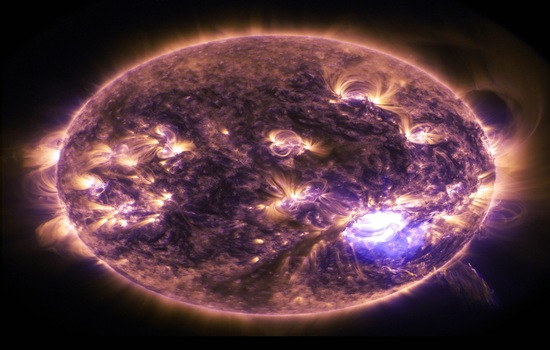
Stars are not just bright dots but enormous fusion reactors. The sunlight that warms your face began as energy released in the Suns core, then took a long journey outward before racing to Earth at the speed of light. Even the elements in your body tell a cosmic story: many were forged in stars and spread through space by stellar winds and explosive deaths.
Conclusion Reality Checkpoint is a reminder that nature rewards careful thinking. The world runs on consistent rules, but our intuition is built for everyday survival, not for understanding atoms, pressure systems, or curved spacetime. When a quiz answer surprises you, treat it as a doorway rather than a gotcha. Follow the thread, test the idea, and you will come away with something better than trivia: a more accurate sense of how reality really works.