-287005.jpg)
Introduction The night sky looks calm, but it hides a universe packed with extremes. Astronomy is full of facts that sound like fiction until you remember that nature has had 13.8 billion years to get creative. From planets that cook and moons that crackle with ice, to stars that bend time and forces you cannot see, cosmic trivia is a fast way to feel the scale and strangeness of reality.
Scorching worlds and frozen frontiers Our solar system is a lesson in how distance, atmosphere, and sunlight interact. Mercury is closest to the Sun, yet Venus is the hottest planet because its thick carbon dioxide atmosphere traps heat in a runaway greenhouse effect. On Venus, surface temperatures are hot enough to melt lead, and the air pressure is like being deep underwater on Earth. Meanwhile, far from the Sun, Pluto and other icy bodies show that cold can be just as dramatic. Some moons, like Jupiter’s Europa and Saturn’s Enceladus, hide oceans beneath ice. Enceladus even sprays water into space through cracks near its south pole, hinting at chemistry that could be interesting for life.
Giant planets, tiny rocks, and quirky rules Jupiter is the heavyweight of the solar system, more massive than all the other planets combined. Yet its famous Great Red Spot, a storm larger than Earth, is not permanent in the way people imagine. It has been shrinking over time, reminding us that even iconic features evolve. Out beyond Neptune, the Kuiper Belt holds countless small worlds, and the asteroid belt between Mars and Jupiter is often misunderstood. It is not a dense minefield; most asteroids are separated by vast distances. Space is mostly empty, which is why spacecraft can navigate safely through these regions.
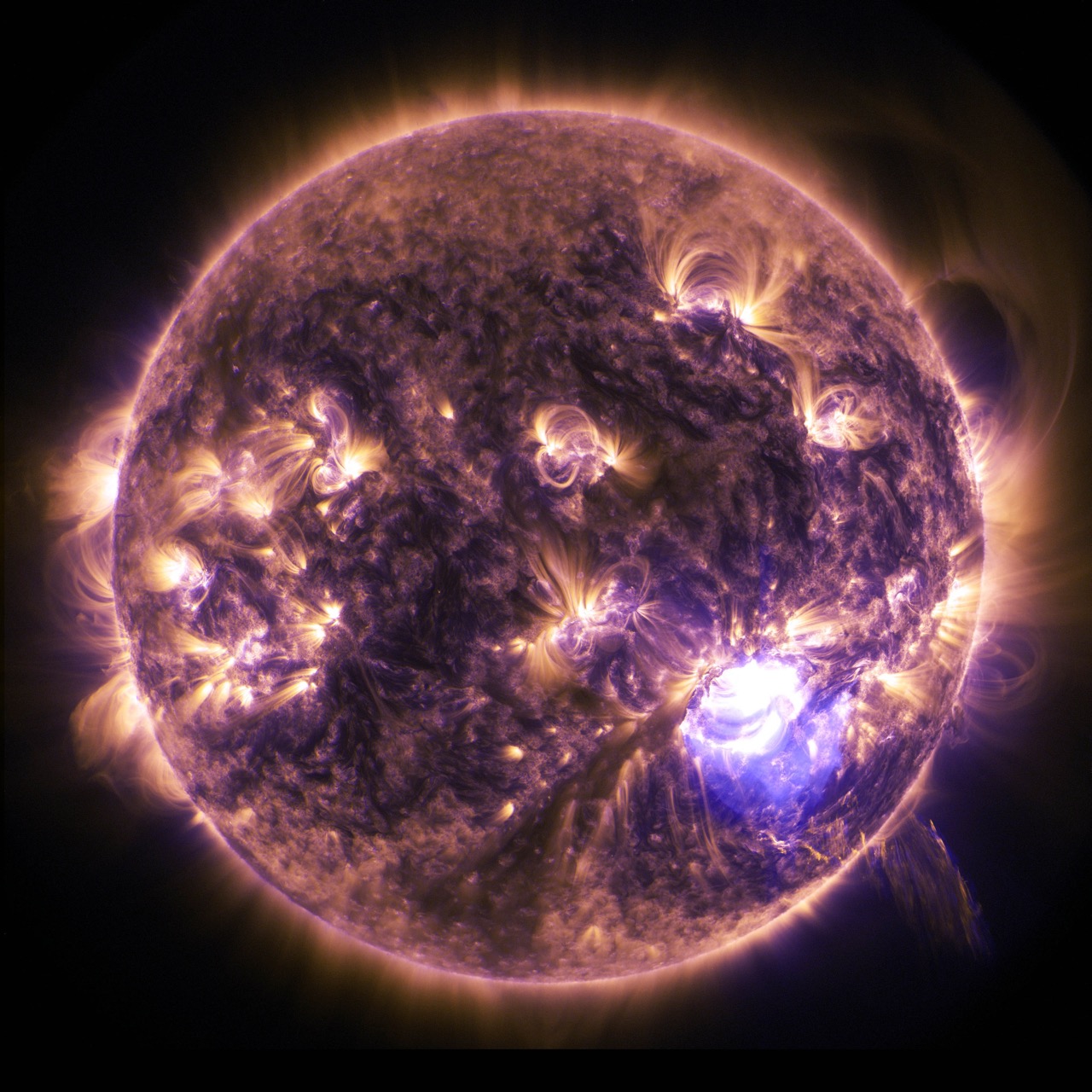
Distances that break intuition Light speed is fast, but space is bigger. Sunlight takes a little over eight minutes to reach Earth, which means you always see the Sun as it was eight minutes ago. The nearest star system, Alpha Centauri, is over four light years away, so even the closest stellar neighbors are separated by distances that challenge travel and communication. In our galaxy, stars orbit the center over hundreds of millions of years. The Milky Way itself is one of billions of galaxies, many racing away from us as the universe expands.
Strange stars and invisible forces Stars come in many flavors. Some end their lives gently, leaving behind white dwarfs, while heavier stars can explode as supernovae and collapse into neutron stars or black holes. Neutron stars pack more mass than the Sun into a city sized sphere, creating gravity so intense that a teaspoon of material would weigh billions of tons on Earth. Black holes push this even further, warping space and time so strongly that not even light can escape from within a boundary called the event horizon. Even when you cannot see them directly, their presence can be revealed by how they tug on nearby stars or heat surrounding gas.
Conclusion Cosmic facts are fun because they mix simple ideas with mind stretching outcomes. A thicker atmosphere can beat proximity to the Sun, a tiny moon can hide an ocean, and a star can become an object denser than anything we can make in a lab. The more you learn, the more the universe feels both understandable and wonderfully weird. That is the spirit of a good trivia challenge: quick questions that open the door to big, real discoveries.