


Introduction The universe may look chaotic, but it runs on a surprisingly consistent set of rules. From the way a ball arcs through the air to the way light bends around a galaxy, the same underlying principles guide motion, energy, and matter. A good physics quiz does more than test memorized definitions. It also pokes at intuition, because many real laws behave differently than everyday experience suggests. Understanding a few key ideas makes the puzzles feel less like tricks and more like glimpses into how reality is built.
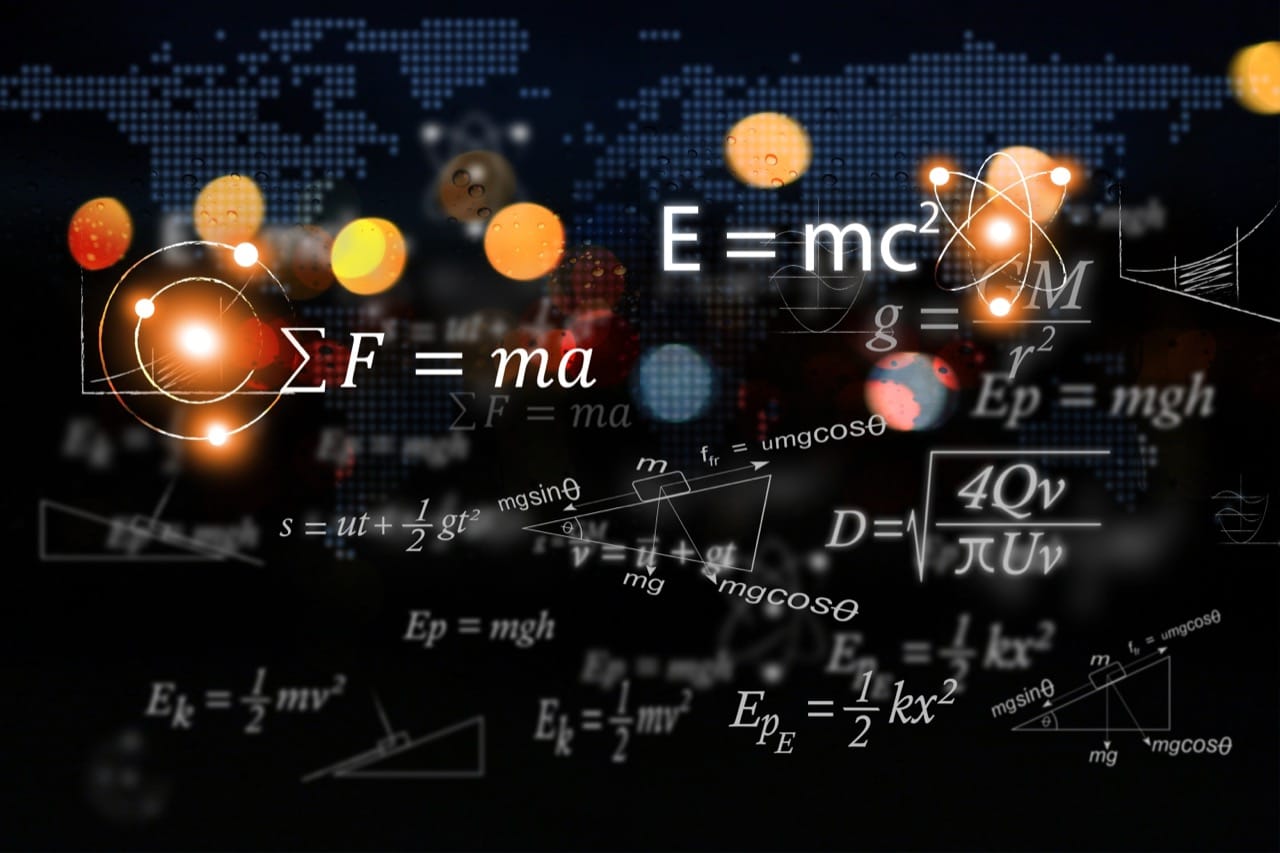
Everyday motion: forces you can feel Start with the basics: Newtons laws. The first law says objects keep doing what they are doing unless a net force changes that motion. That is why you lurch forward when a car stops; your body keeps moving until the seat belt provides the force to slow you down. The second law ties force, mass, and acceleration together, explaining why a heavier shopping cart needs more push to speed up. The third law, action and reaction, is why walking works at all: your foot pushes the ground backward, and the ground pushes you forward. Friction and air resistance complicate these clean laws, which is why real life is not like frictionless textbook problems. But knowing when to ignore friction and when it dominates is part of good reasoning.
Energy and momentum: what stays the same Many quiz questions revolve around conservation laws. Energy can change form, but in an isolated system the total stays constant. A swinging pendulum trades gravitational potential energy for kinetic energy and back again. Momentum, the product of mass and velocity, is also conserved when external forces are negligible. This is why recoil happens: the momentum of the bullet forward is balanced by the momentum of the gun backward. A surprising twist is that conservation can hold even when outcomes look dramatic. In an explosion, fragments fly outward, yet the center of mass continues along the same path it would have followed before the blast.
Heat, randomness, and the arrow of time The second law of thermodynamics gives time a direction. In simple terms, systems tend to move toward states that are more spread out and more probable. That is why heat flows from hot to cold, why cream mixes into coffee, and why you never see a shattered glass leap back onto the table. This law is statistical, not magical. Individual molecules can do unlikely things, but the combined behavior of countless particles makes the overall trend extremely reliable.
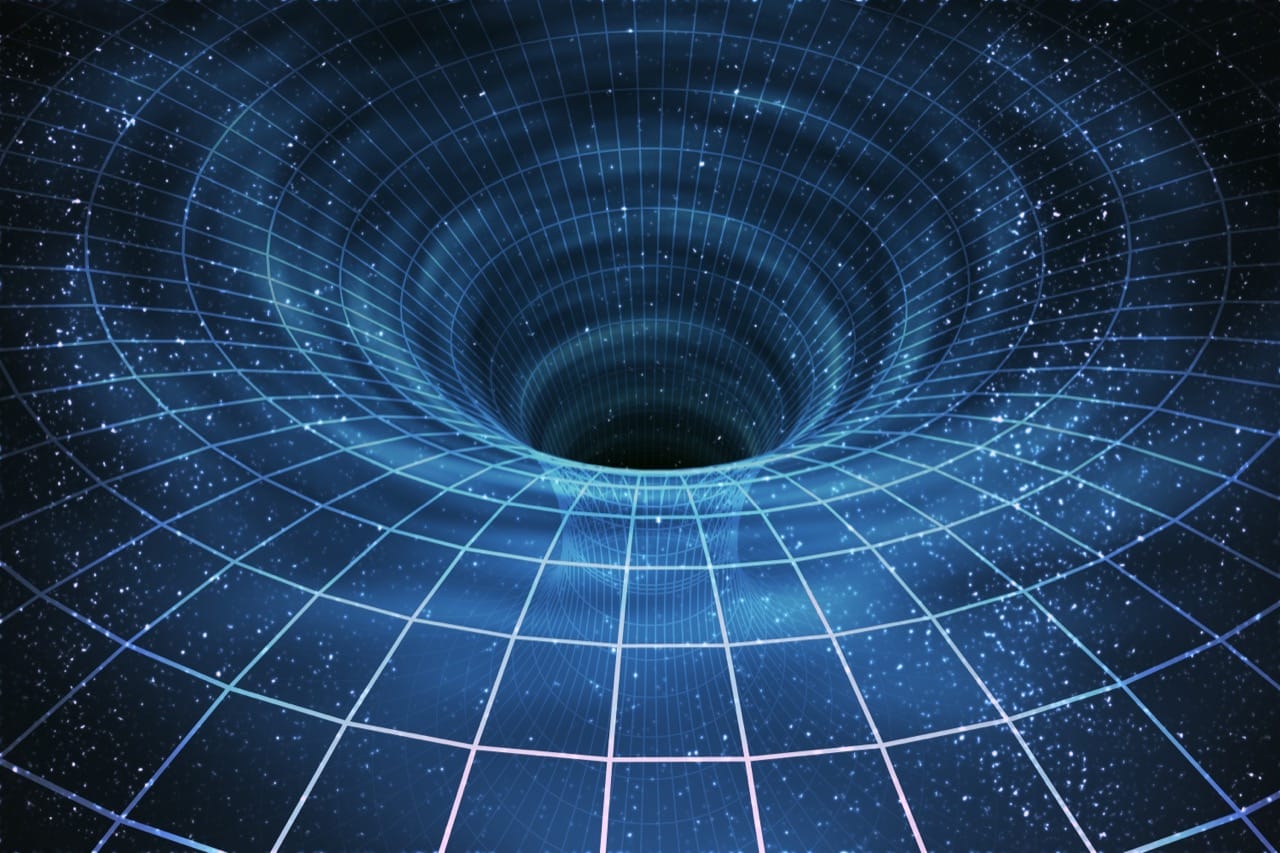
Light and relativity: when intuition breaks Light behaves as both a wave and a particle, depending on how it is measured. Experiments like the double slit show interference patterns that look wave like, yet detectors can register individual photons. Relativity adds more surprises. Special relativity says the speed of light in a vacuum is the same for all observers, leading to time dilation and length contraction. These effects are not just theory; they are measured in fast moving particles and must be accounted for in GPS timing. General relativity extends the idea by describing gravity as the curvature of spacetime. Massive objects bend the paths of light, producing gravitational lensing that astronomers use to map invisible matter.
Extreme physics: black holes and quantum rules Near a black hole, gravity becomes so intense that the escape speed exceeds the speed of light, defining an event horizon. Time also behaves strangely: to a distant observer, processes near the horizon appear slowed. On the quantum side, uncertainty is not about bad instruments; it is built into nature. You can know a particles position very well or its momentum very well, but not both at the same time with unlimited precision. This underpins modern technology such as lasers and semiconductors.
Conclusion The Cosmic Rulebook Challenge draws on a handful of powerful ideas that apply everywhere, from a step on the sidewalk to the edge of a black hole. The fun comes from learning which principle fits the evidence, especially when intuition misleads. With Newton guiding motion, conservation laws tracking what cannot disappear, thermodynamics explaining why time seems to move forward, and relativity and quantum theory reshaping the extremes, the universe becomes a puzzle you can actually learn to solve.