












Introduction Curiosity is often sparked by ordinary sights: an ice cube bobbing in a drink, a magnet snapping onto a fridge, or the night sky filled with stars that seem to shine forever. These simple moments point to deep rules that govern everything from atoms to galaxies. A good science quiz can feel like a tour through those rules, mixing familiar ideas with surprising twists and reminding us that the universe is both logical and full of delightful exceptions.
Small Stuff with Big Consequences Start with the classic puzzle: why does ice float? Most substances get denser when they freeze, but water is unusual. When water molecules lock into ice, they form an open crystal pattern held together by hydrogen bonds. That structure takes up more space, so the solid becomes less dense than the liquid and floats. This oddity matters far beyond your glass. Floating ice forms an insulating layer on lakes and oceans, helping aquatic life survive cold seasons and shaping Earths climate.
At the atomic level, many everyday properties come from invisible forces. Chemical bonds arise from the attraction between positively charged nuclei and negatively charged electrons. Meanwhile, the reason you do not fall through a chair is not because atoms are like tiny billiard balls. It is mainly electromagnetic repulsion between electron clouds, combined with quantum rules that prevent electrons from piling into the same states. Even the colors you see trace back to electrons absorbing and emitting specific energies.
Energy, Heat, and Sneaky Misconceptions Quizzes love to test the difference between heat and temperature. Temperature measures average kinetic energy of particles, while heat is energy transferred due to a temperature difference. That is why a small spark can be extremely hot but not contain much total heat, and why a bathtub of warm water can hold far more thermal energy than a cup of boiling water.
Another common trap involves phase changes. When ice melts, the temperature stays near the melting point until the solid is gone. The energy you add goes into rearranging molecular bonds rather than raising temperature. The same idea explains why sweating cools you: evaporation steals energy from your skin.
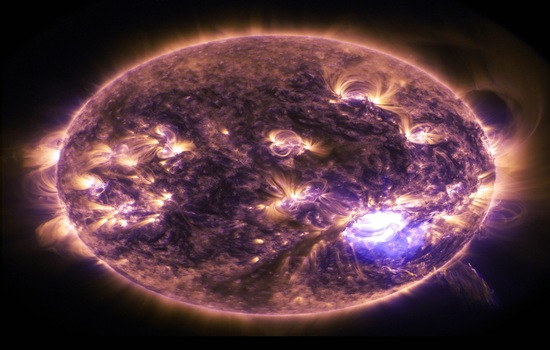
Stars, Space, and the Long Shine Move from atoms to stars and the question becomes: how do stars keep shining? The answer is nuclear fusion. In a stars core, immense gravity raises temperature and pressure so hydrogen nuclei can overcome their electrical repulsion and fuse into helium. A small amount of mass becomes energy, following Einsteins E equals m c squared. Light takes a long journey outward, bouncing through dense plasma before escaping as the sunlight that powers weather, photosynthesis, and much of life on Earth.
Space also plays tricks on intuition. Sound needs a material to travel through, so outer space is silent. And while gravity feels like a pulling force, it can be understood as mass and energy shaping spacetime, guiding how objects move.
Earth Systems and Life Connections Earth science adds its own curiosities. The sky is blue mainly because shorter wavelength light scatters more in the atmosphere. Seasons are caused by Earths tilt, not its distance from the Sun. Biology joins in with chemistry: the energy in food ultimately comes from sunlight captured by photosynthesis, and the oxygen we breathe is a byproduct of ancient and modern life reshaping the atmosphere.
Conclusion A quiz that jumps between atomic oddities and cosmic curiosities highlights a powerful theme: the same basic principles echo across scales. The structure of water influences ecosystems, electromagnetic forces shape matter, and nuclear reactions light up the stars. When you answer a question or get surprised by an explanation, you are practicing a scientific habit that matters more than any score: turning wonder into understanding, one reveal at a time.